





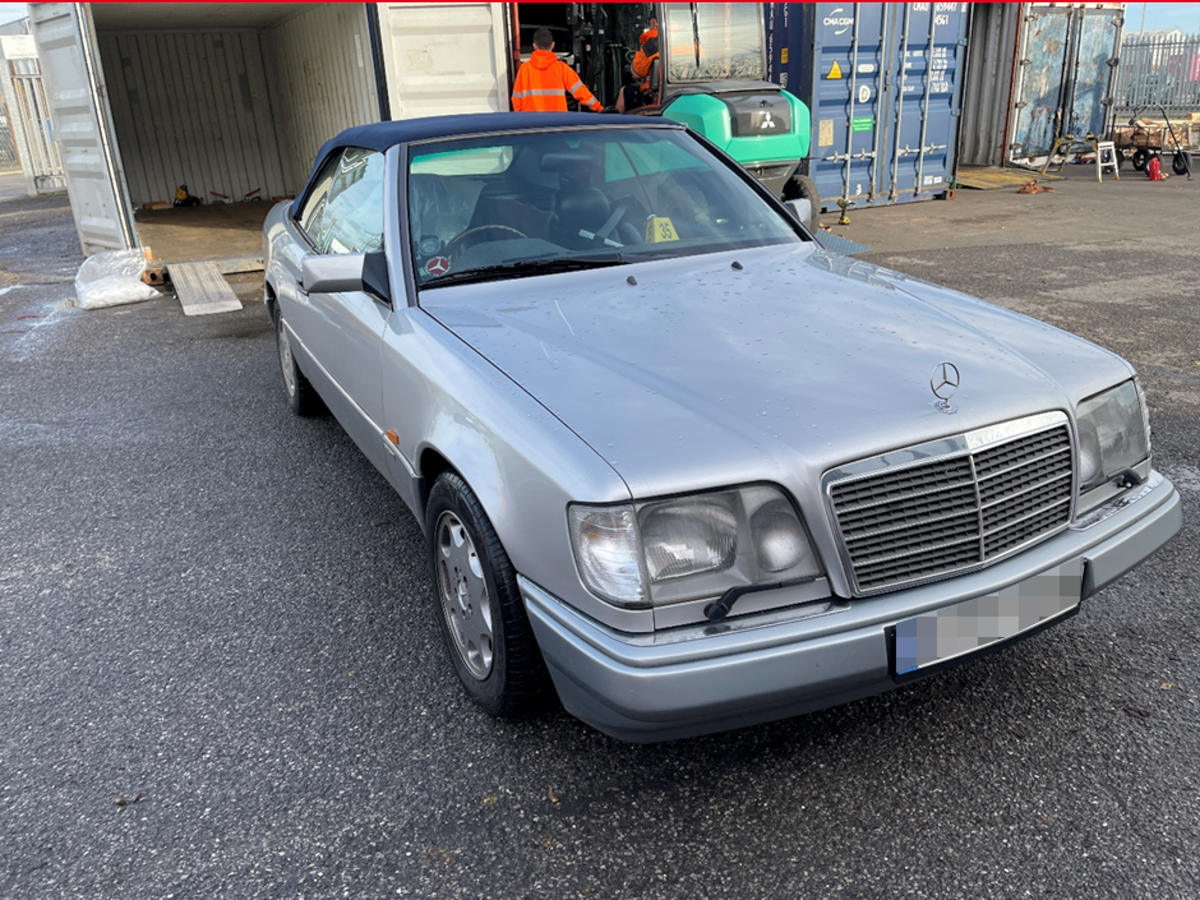
Here we take a closer look at how Autoshippers successfully shipped a 1995 Mercedes E320 Cabriolet from the UK to Brisbane, Australia, using our Full Container Load (FCL) service. From delivery at our loading facility to an ocean voyage aboard the container vessel ONE Mackinac, this shipment is a clear example of how classic car shipping to Australia is safely and securely handled from start to finish.
Shipping a classic car to Australia is a carefully managed process that requires experience, planning, and the right transport method. With increasing interest from Australian enthusiasts in well-preserved European vehicles, cars that are over 30 years old are now regularly being imported under Australia’s historic and classic vehicle provisions.
Eligibility is generally based on the vehicle’s build/manufacture date, not simply the year it was first registered.
A Classic Mercedes Bound for Australia
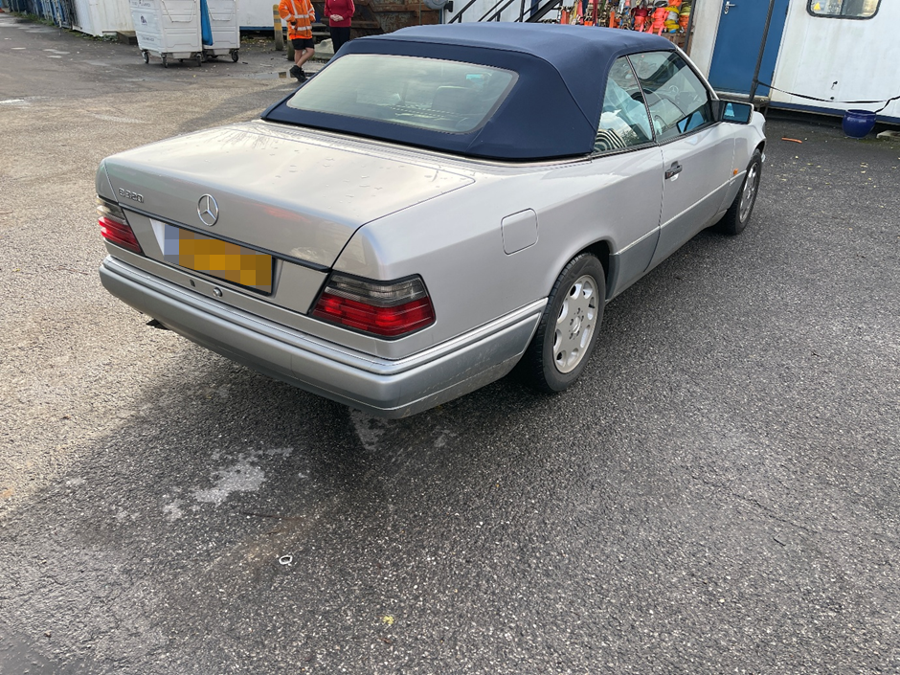
The vehicle at the centre of this shipment was a 1995 Mercedes-Benz E320 Cabriolet, a model that has become increasingly desirable as a modern classic. Built during Mercedes-Benz’s highly regarded W124 era, the E320 Cabriolet combines elegant styling, robust engineering, and open-top touring comfort.
Finished in silver with a dark blue soft top, this example was in clean, original condition and perfectly suited for export to Australia, where European convertibles of this era are highly sought after. At over 30 years old, the Mercedes also met the age criteria that can make importing classic vehicles into Australia more straightforward when handled correctly, and should also be Duty Free.
Why Shipping a Classic Car to Australia Requires Specialist Handling
Australia is one of the most demanding destinations for international car shipping. The long transit times, strict biosecurity regulations, and distance involved mean that classic vehicles must be carefully prepared and protected throughout the journey. It may be a demanding destination, but Autoshippers successfully ship hundreds of vehicles for our customers from the UK to Australia, and have the experience to help make the process stress free.
Older vehicles, particularly convertibles, benefit from enclosed shipping methods that shield them from salt air, weather exposure, and unnecessary handling. This is why choosing an experienced shipping company is essential when moving a classic car halfway around the world.
Autoshippers specialises in shipping classic and collector vehicles to Australia, offering tailored advice on shipping methods, documentation, and compliance to ensure a smooth process from the UK to arrival down under.
Choosing the Right Shipping Method: Why FCL Was Used
RoRo vs Container Shipping to Australia
When shipping a car from the UK to Australia, customers typically choose between Roll-on/Roll-off (RoRo) and container shipping. For classic vehicles, container shipping is often the preferred option.
For this shipment Geoffrey, our customer, chose to select our Full Container Load (FCL) service, even though the RoRo option was more cost effective. This means the Mercedes was shipped in its own dedicated 20ft container, rather than sharing space with other vehicles or cargo.
Key Benefits of FCL for Classic Vehicles
The advantages of FCL shipping for a classic car include:
- Fully enclosed protection throughout the ocean journey
- No shared cargo or risk of contact with other vehicles
- Minimal handling once loaded and secured
- Ideal conditions for long-distance ocean transport
Importing Classic Vehicles into Australia: Age-Based Pathways and Duty Considerations
When importing a classic vehicle into Australia, age plays an important role in both eligibility and potential customs concessions.
Vehicles that are 25 years old or older can typically be imported under Australia’s historic or classic vehicle import pathways, which may simplify compliance requirements compared to newer vehicles. These pathways often reduce the need to meet modern Australian Design Rules (ADRs), making older European classics particularly attractive for import.
In addition to the 25-year eligibility pathway, vehicles that are 30 years old or more at the time of import should also qualify for duty-free entry under Australian customs tariff concessions. This means that while Goods and Services Tax (GST) may still apply, import duty can be waived for qualifying vehicles.
As this 1995 Mercedes-Benz E320 Cabriolet had reached 30 years of age at the time of import, it qualified for duty-free treatment under Australia’s classic vehicle provisions, helping reduce overall import costs for the customer.
It is important to note that duty concessions are separate from import approval requirements. Regardless of age, all vehicles must still obtain Vehicle Import Approval and pass customs and biosecurity inspections upon arrival, and you will still be liable for GST and, if applicable, Luxury Car Tax.
For a full explanation of eligibility, compliance pathways, and what to expect when importing a classic vehicle into Australia you can refer to our Classic Car Shipping to Australia Guide.
Preparing a Classic Car for Container Shipping
Australian Biosecurity and Cleanliness Requirements
Australian authorities operate strict biosecurity controls, and vehicles that arrive contaminated with dirt, soil, plant material, or organic matter can be subject to delays, additional cleaning costs, or quarantine action on arrival. To avoid this, Autoshippers advised Geoffrey on the best process for cleaning and preparing his Mercedes, before he delivered it to the container loading facility. Full details are available on the Department of Agriculture’s biosecurity page.
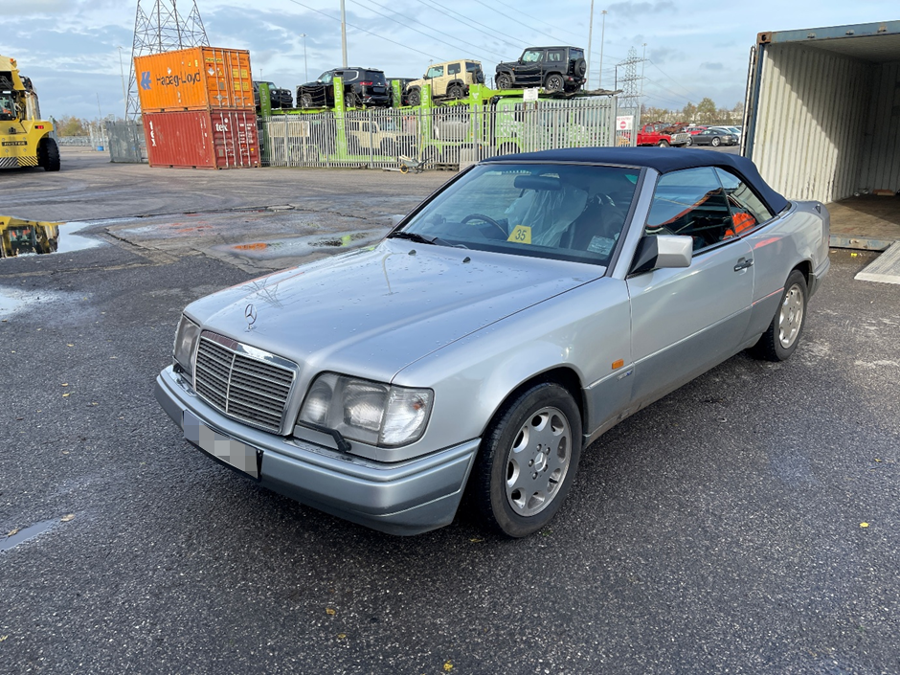
Delivering the Vehicle to Autoshippers Container Loading Facility
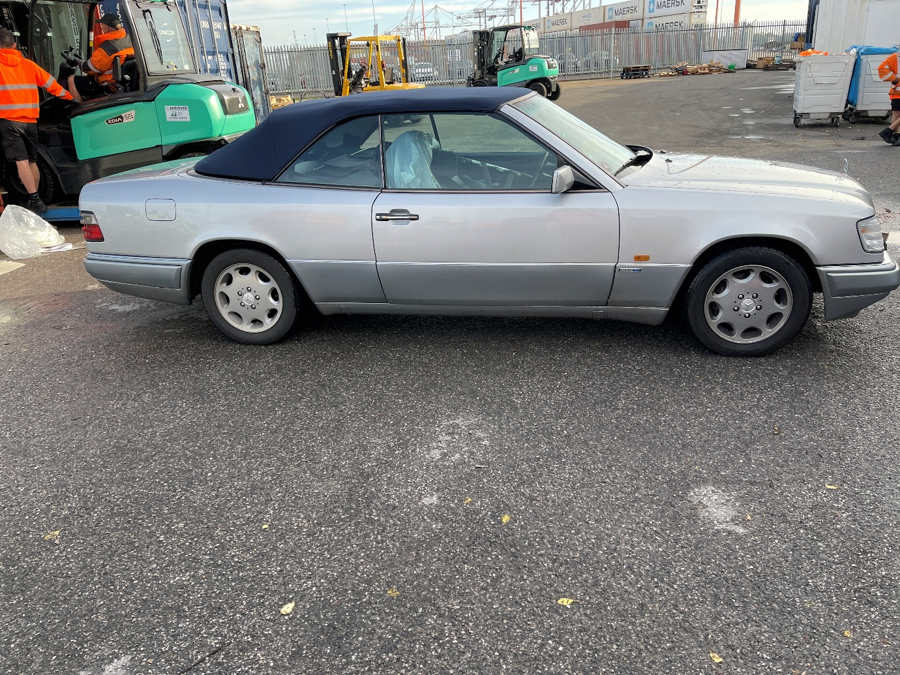
Geoffrey chose to deliver the vehicle himself directly to Autoshippers’ container loading facility, rather than selecting to use our specialist nationwide vehicle transport service. This option is popular with UK-based customers who prefer to hand over their vehicle personally and avoid the need for third-party transport.
On arrival, the Mercedes was checked in by our loading team and visually inspected prior to shipping. This initial inspection allows Autoshippers to record the vehicle’s condition at the point of handover and confirm that it is suitable for container loading before being prepared for export.
Loading and Securing the Mercedes in a Full Container
Positioning the Vehicle Inside the Container
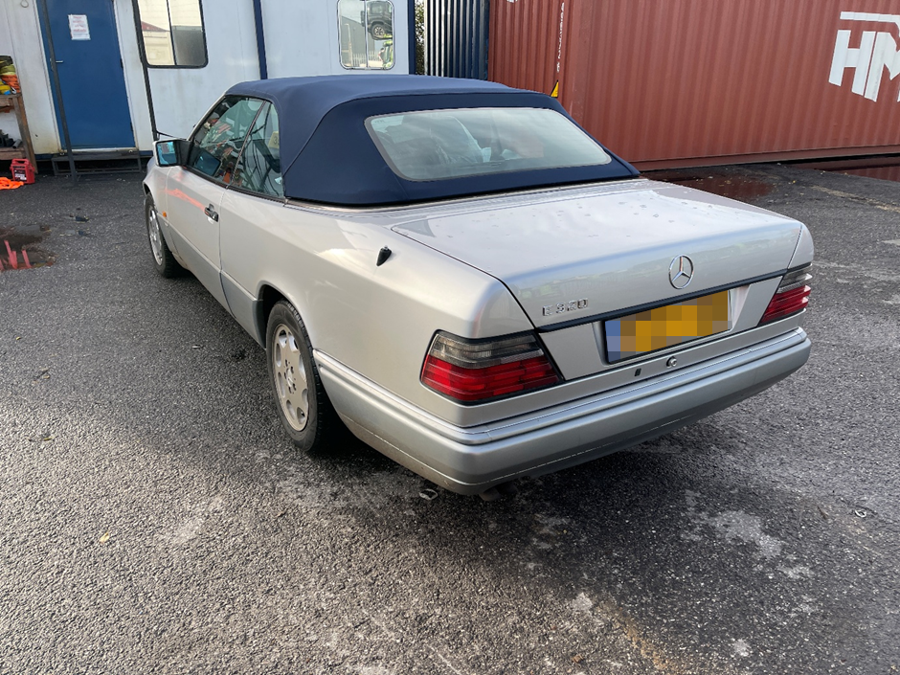
Once the Mercedes E320 Cabriolet had been fully prepared, the next critical stage of the shipment was the container loading and securing process. This is one of the most important steps when shipping a classic vehicle to Australia, particularly given the length of the ocean voyage and the need to minimise movement at sea.
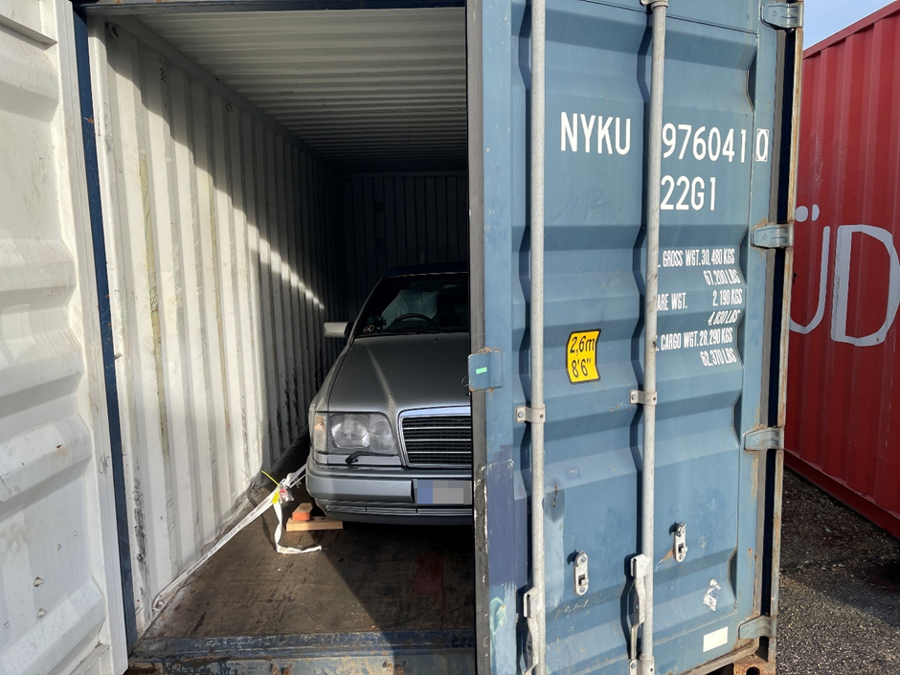
The vehicle was carefully driven into a dedicated 20ft shipping container and positioned centrally to ensure safe clearance at the front, sides, and rear. Correct positioning is essential not only to prevent contact with the container walls, but also to ensure balanced weight distribution throughout the journey.
Securing the Vehicle for Ocean Transit
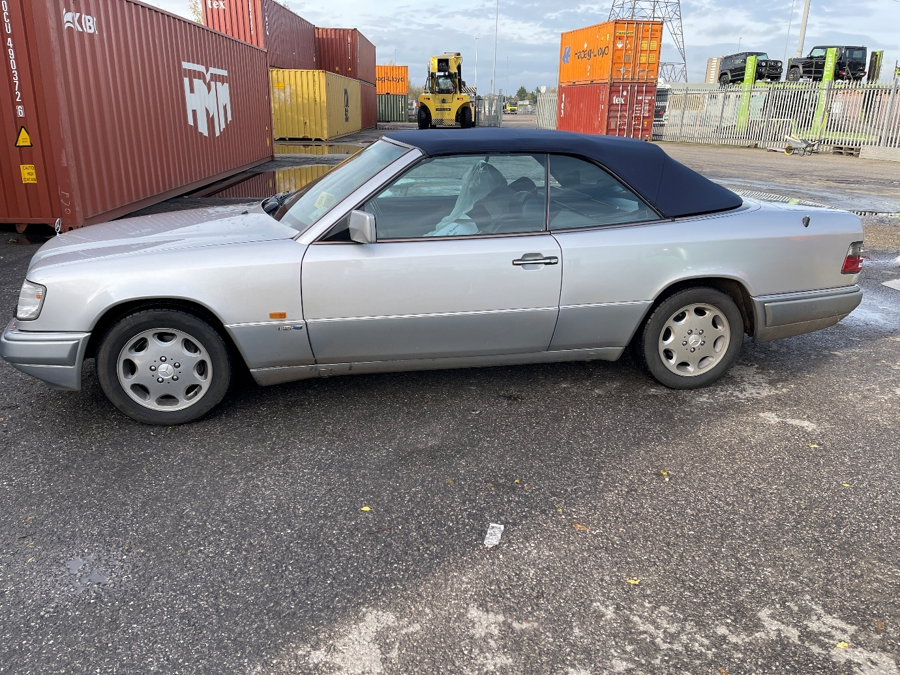
With the vehicle in its final position, Autoshippers’ loading team secured the Mercedes using industry-approved methods designed specifically for vehicle transport. This included:
- Timber wheel chocks fixed securely around the tyres to prevent forward or backward movement
- Soft-tie lashing straps attached to the container’s internal lashing points, ensuring the vehicle was held firmly in place without placing stress on suspension or chassis components
- Careful alignment and tensioning of all restraints to allow the vehicle to remain stable while still protecting sensitive mechanical parts
Why FCL Reduces Risk for Classic Cars
Unlike Roll-on/Roll-off shipping, where vehicles are driven on and off vessels, Full Container Load shipping ensures the vehicle remains stationary once secured. After loading, the container doors were closed and sealed, and the Mercedes was not moved again until the container was opened on arrival in Brisbane.
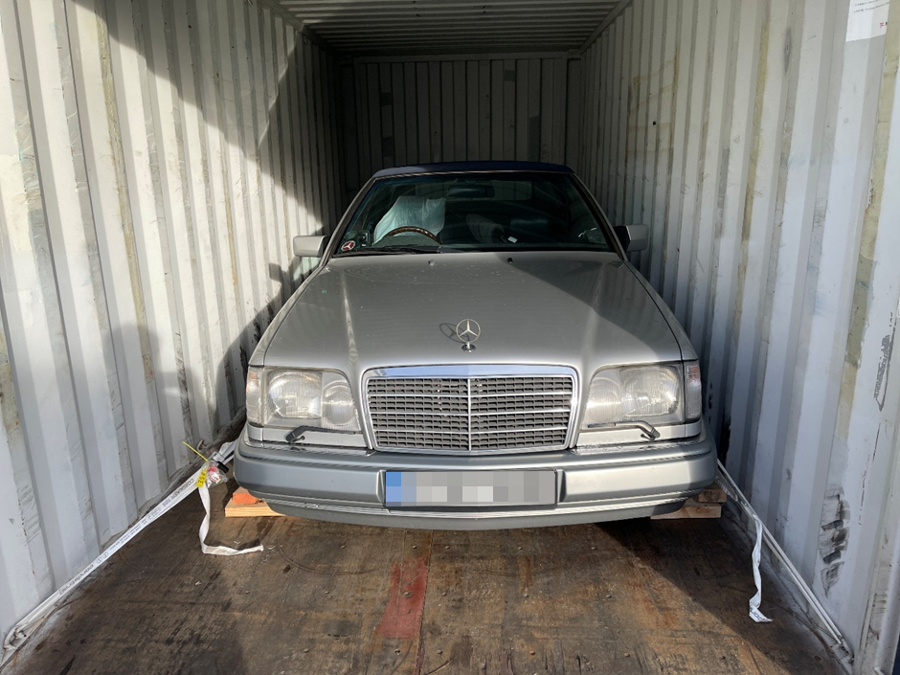
This method of shipping is particularly well suited to classic and collector vehicles. By eliminating unnecessary handling and providing a fully enclosed environment, FCL container shipping significantly reduces exposure to salt air, weather, and transit-related risks. For a classic convertible like this Mercedes E320 Cabriolet, shipping in a container offers an added layer of protection and peace of mind for long-distance international transport.
Documentation and Export Process from the UK
Import Approval Requirements for Australia
Accurate documentation is essential when shipping a vehicle overseas, and this is especially important when importing a car into Australia. One of the key requirements for Australian-bound vehicles is that the correct Vehicle Import Approval must be in place before the vehicle is shipped.
Import Approval is issued by the Australian Government and confirms that a vehicle is eligible to be imported under the appropriate scheme. Shipping a vehicle without approval can result in delays, additional costs, or refusal of entry on arrival, which is why this step must be completed prior to export.
For customers shipping vehicles to Australia, Autoshippers provides guidance on the Import Approval process as part of the overall shipping journey. Our Australia Car Shipping and Import Guide explains the approval process in more detail, including eligibility considerations, documentation requirements, and how vehicle age can affect import pathways.
While Autoshippers can advise on the timing and requirements of Import Approval, the application itself must be completed and approved before the vehicle is loaded for shipment using the Australian Governments ROVER portal. Once approval is confirmed, the export and shipping process can proceed without unnecessary risk of delay.
UK Export and Shipping Documentation
For this shipment, Autoshippers worked with the customer to ensure that all required documentation was in place prior to export. This included:
- Australian Vehicle Import Approval (VIA) – confirming that the vehicle was approved for import before shipping commenced
- UK V5 registration document – to verify ownership and vehicle details
- UK export declaration, submitted to HMRC by Autoshippers
- Shipping instructions and Bill of Lading, issued once the container was booked and loaded by Autoshippers
As the V5 was in Geoffrey’s name, we did not require further proof of ownership, but this is often needed in the form of a Bill of Sale, or invoice, from the seller.
Why Documentation Must Be Completed Before Shipping
Securing the required approvals in advance is essential. Vehicles shipped to Australia without the correct approval in place may be held on arrival, refused entry, or incur significant delays and additional costs. For this reason, Autoshippers advises all customers shipping vehicles to Australia to obtain their Import Approval before the vehicle is loaded for export.
Once the documentation was confirmed and verified, the Mercedes E320 Cabriolet was cleared for export, allowing the container to be sealed and released for its ocean voyage from Southampton to Brisbane.
Autoshippers provides guidance throughout this process, helping customers understand which approvals are required and when they need to be arranged, ensuring compliance at every stage of the shipment.
Southampton to Brisbane aboard ONE Mackinac
With loading complete and documentation finalised, the container was delivered to Southampton quay for loading aboard the container vessel ONE Mackinac.
The ONE Mackinac is a modern, high-capacity container vessel designed for long-haul international trade routes. With the ability to carry thousands of shipping containers across multiple decks and holds, vessels of this class are purpose-built for secure, efficient ocean transport. Containers are stacked and secured using integrated lashing systems, ensuring stability throughout the voyage, even across extended ocean crossings.
Throughout the journey, the Mercedes remained sealed inside its container, protected from the elements and external handling. Regular tracking updates were provided at key stages, giving clear visibility from departure in the UK through to arrival in Australia.
Arrival in Brisbane and Australian Import Considerations
On arrival in Brisbane, the container was discharged and moved to a bonded facility for inspection and clearance. Australian customs and biosecurity authorities carry out thorough checks on all imported vehicles, particularly used and classic cars.
Because the Mercedes had been properly prepared and cleaned prior to export, the inspection process was straightforward. Once cleared, the vehicle was released from the container, ready for onward collection and the next steps toward registration in Australia.
Asbestos Testing and Compliance for Australian Imports
When importing older vehicles into Australia, asbestos compliance is something that will need to be considered. Australian Border Force regulations prohibit the import of materials containing asbestos, and because asbestos was more commonly used in automotive components decades ago, authorities may request supporting documentation for classic vehicles.
For this shipment, Geoffrey arranged an asbestos inspection prior to shipping and obtained an asbestos-free declaration for the Mercedes. The process was straightforward to arrange and provided confirmation that the vehicle did not contain asbestos in its components, ensuring it met Australian import requirements on arrival.
While many modern vehicles do not require this step, it can be relevant for older classics manufactured before the year 2000. Organising the appropriate documentation before shipping helps avoid delays and ensures a smooth clearance process once the vehicle reaches Australia.
Autoshippers can advise customers when asbestos documentation may be appropriate, and give details of our trusted partner who is approved by the National Association of Testing Authorities in Australia (NATA) and the Australia government to undertake asbestos inspections, helping make the process clear and easy to manage from the outset.
A Smooth Classic Car Shipment with Autoshippers
From delivery at our UK loading facility to successful arrival in Brisbane, this shipment demonstrates the value of careful planning and professional handling. By choosing a Full Container Load service, Geoffrey ensured his classic Mercedes was protected throughout its long journey to Australia.
Every stage of the process was managed by Autoshippers, providing peace of mind and clear communication from start to finish.
Why the Mercedes-Benz E320 Cabriolet Is a Modern Classic
It’s easy to see why vehicles like this 1995 Mercedes-Benz E320 Cabriolet continue to attract international interest, particularly from classic car enthusiasts in Australia, and Geoffrey has many miles of happy motoring in front of him.
The W124 Cabriolet Lineage
The E320 Cabriolet forms part of Mercedes-Benz’s highly respected W124 model range, widely regarded as one of the brand’s most durable and well-engineered eras. Introduced in the early 1990s, the W124 Cabriolet combined traditional Mercedes build quality with open-top refinement, featuring a fully engineered four-seat convertible body rather than a modified saloon shell.
These models were produced in relatively limited numbers compared to their saloon counterparts, which has helped cement their status as modern classics. Known for their robust mechanical design and understated styling, W124 Cabriolets remain highly usable today while offering strong long-term collectability.
The 1995 Mercedes-Benz E320 Cabriolet is powered by a 3.2-litre inline six-cylinder M104 engine producing approximately 217 bhp, paired with an automatic transmission driving the rear wheels. Designed as a true four-seat convertible, the E320 Cabriolet was a factory-built model rather than a converted saloon, offering refined open-top touring combined with the robust engineering for which the W124 series is renowned.
Why the E320 Cabriolet Appeals to Australian Collectors
For Australian enthusiasts, the E320 Cabriolet offers an appealing combination of European luxury, reliability, and usability in warmer climates. Its four-seat layout, refined ride quality, and strong mechanical reputation make it a practical classic that can be enjoyed regularly rather than stored away.
As a vehicle now firmly within classic import age brackets, examples like this 1995 E320 Cabriolet are increasingly sought after by buyers looking for high-quality European convertibles that were never widely available in Australia when new.
Why Choose Autoshippers for Classic Car Shipping to Australia
Autoshippers has over 25 years of experience shipping vehicles worldwide, with specialist expertise in classic and collector car shipping to Australia. Whether using RoRo or container services, our team provides tailored advice, secure handling, and full support with documentation and compliance.
If you’re considering shipping a classic car to Australia, especially a vehicle over 30 years old, Autoshippers can guide you through the process and help you choose the right shipping solution.
For a personalised quote or expert advice simply fill out our quick quote form or contact our team today and let us take care of your classic car’s journey.



 service. Learn about classic car shipping to Australia, container loading, transit times, and importing vehicles over 30 years old.)